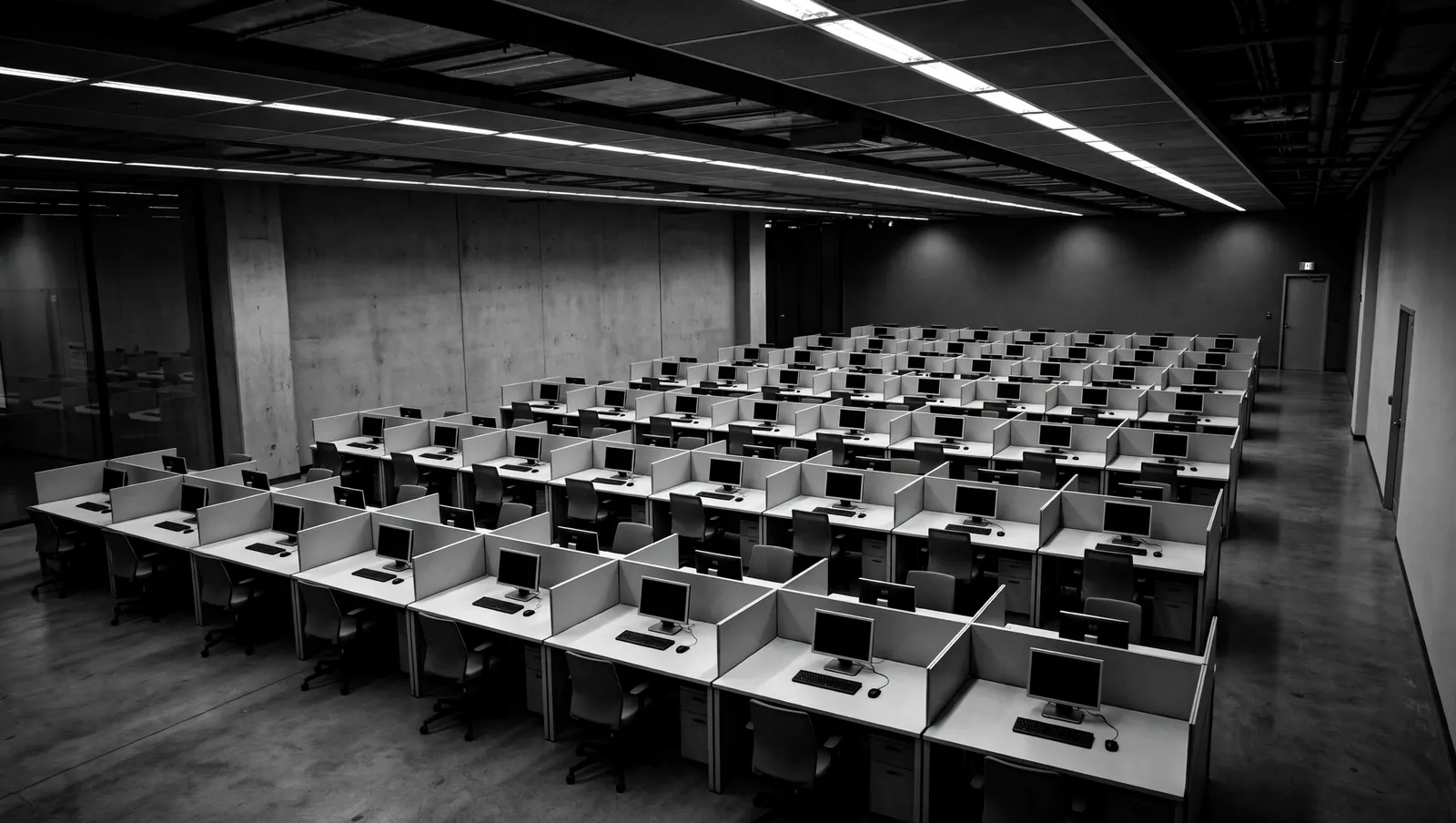
The open office was sold to employees as a culture decision — knock down the walls, spark spontaneous collaboration, break down hierarchy. It was sold to the board as a real estate decision, and that pitch had a number attached: dramatically more employees per square foot, once you remove offices and cubicle walls.
Both pitches happened at the same company, often the same week. Only one of them had a line item.
Studies on open offices have consistently found what anyone who’s sat in one could tell you for free: measured face-to-face interaction tends to go down, not up, once you remove privacy, and people compensate by putting on headphones and messaging each other instead — from ten feet away. The “collaboration” premise didn’t survive contact with actual humans who don’t want to be overheard.
Meanwhile the real estate savings were real, immediate, and easy to model in a budget meeting. When a decision produces a measurable win for the people approving it and a measurable loss for the people living with it, and it gets made anyway, that tells you whose interests the deci